
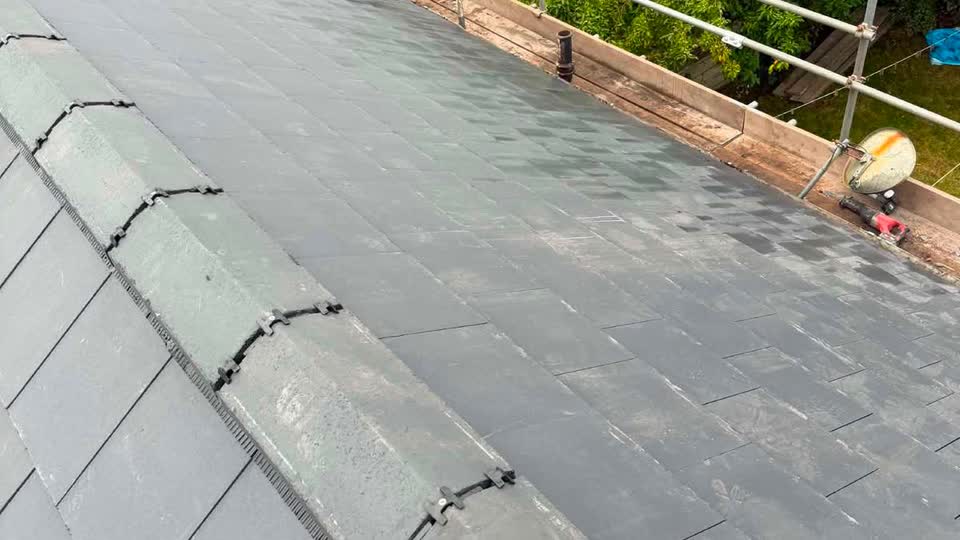
Ridge and verge work
Ridge tiles re-bedded or dry fixed, and verges made secure against the wind.
In short
The ridge is the line of tiles capping the top of a roof, and the verge is the edge where the roof meets the gable wall. Both were traditionally held with mortar, and mortar cracks and lets go over time. The fix is either re-bedding them in fresh mortar or converting to a dry ridge system, which fixes each tile mechanically with clips and screws and needs no mortar at all.
Ridge and verge mortar is the part of a roof that fails quietly. Nothing leaks at first, the mortar just cracks and starts dropping out in pieces. Then one windy night a ridge tile lifts, and because it sits at the very top of the roof it does a lot of damage on the way down.
Signs your ridge or verge needs work
- Lumps of mortar appearing in the gutter or on the ground
- Visible gaps or cracks along the ridge line from the ground
- A ridge tile sitting crooked or noticeably out of line
- Mortar missing along the gable edge of the roof
- Tiles at the verge lifting or rattling in high wind
- Birds getting in under the ridge or at the edge of the roof
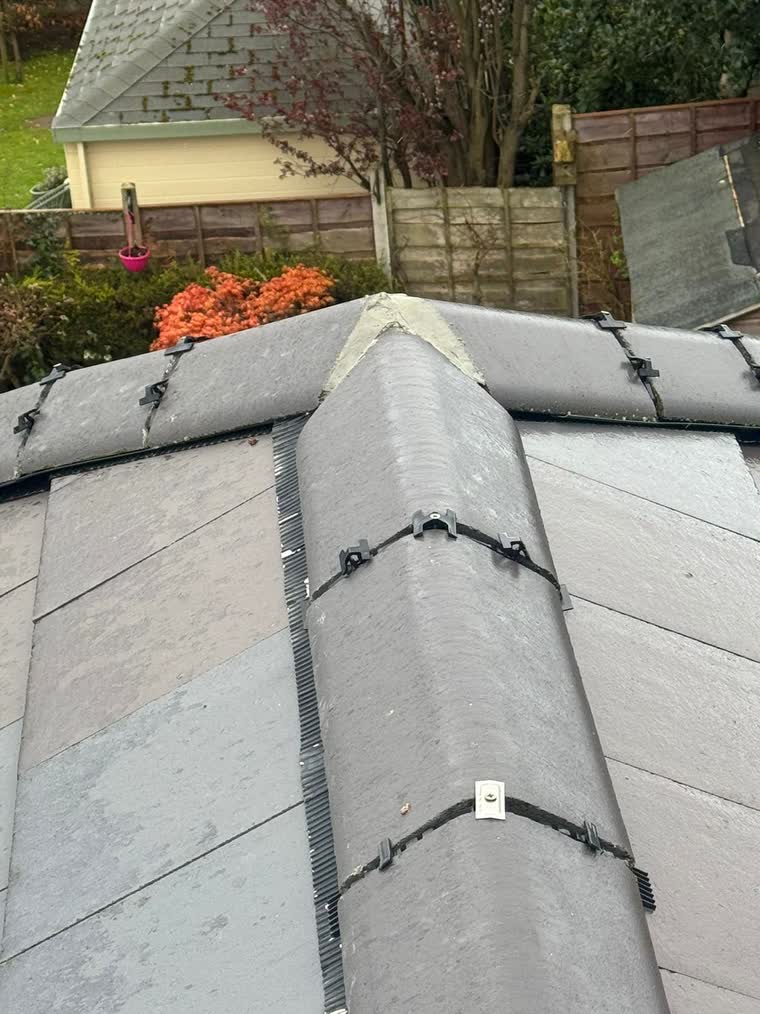
What the job involves
Every roof is different, but the shape of the work is usually the same. Here is how a typical ridge and verge work job runs.
Check the full run
The whole ridge and both verges get looked at, because where one section has failed the rest is usually the same age and going the same way.
Lift and clean off
Ridge tiles are lifted and the old mortar cleaned off so they can be reused where they are sound.
Re-bed or dry fix
Tiles are either bedded back in fresh mortar or refitted with a dry ridge system, depending on what suits the roof and what you would rather have.
Make the verge secure
Verges are repointed or fitted with dry verge units so the edge of the roof cannot be lifted by the wind.
Want someone to take a look?
Call 07939 013870 or send a photo on WhatsApp and you will get a straight answer on what it needs.
Ridge and verge work near you
Weather Proof Roofing and Building Services covers Cheshire, North Wales, Merseyside and Greater Manchester. Pick your area for local detail, or call 07939 013870 if you are not sure whether you are in range.
Frequently asked questions
What is a dry ridge system?
A dry ridge system fixes each ridge tile down mechanically with clips, screws and a ventilated roll, instead of bedding it in mortar. It cannot crack and wash out the way mortar does, it lets the roof breathe, and it is what most new roofs are built with now.
Is dry ridge better than mortar?
For durability, yes, which is why it is standard on new build. Mortar still has its place on period property and in conservation areas where the look matters, and a well-bedded ridge in good mortar will last a long time.
How often does ridge mortar need replacing?
Bedded ridge mortar typically needs attention somewhere between ten and twenty years, depending on how exposed the roof is and how well it was mixed and pointed in the first place. Coastal and hilltop properties get through it faster.
Can you just re-bed the loose ridge tiles?
It can be done, but on a run where the mortar is all the same age you tend to be back doing the next section before long. Doing the full run at once usually works out better value once access is paid for.
What is a dry verge?
Dry verge units are interlocking caps that fit over the tile ends along the gable edge and screw down, replacing the mortar that used to seal that edge. They stop wind getting under the tiles and keep birds and rodents out.