
New roofs and re-roofing
Full strip and re-cover in slate or tile, with new felt and battens.
In short
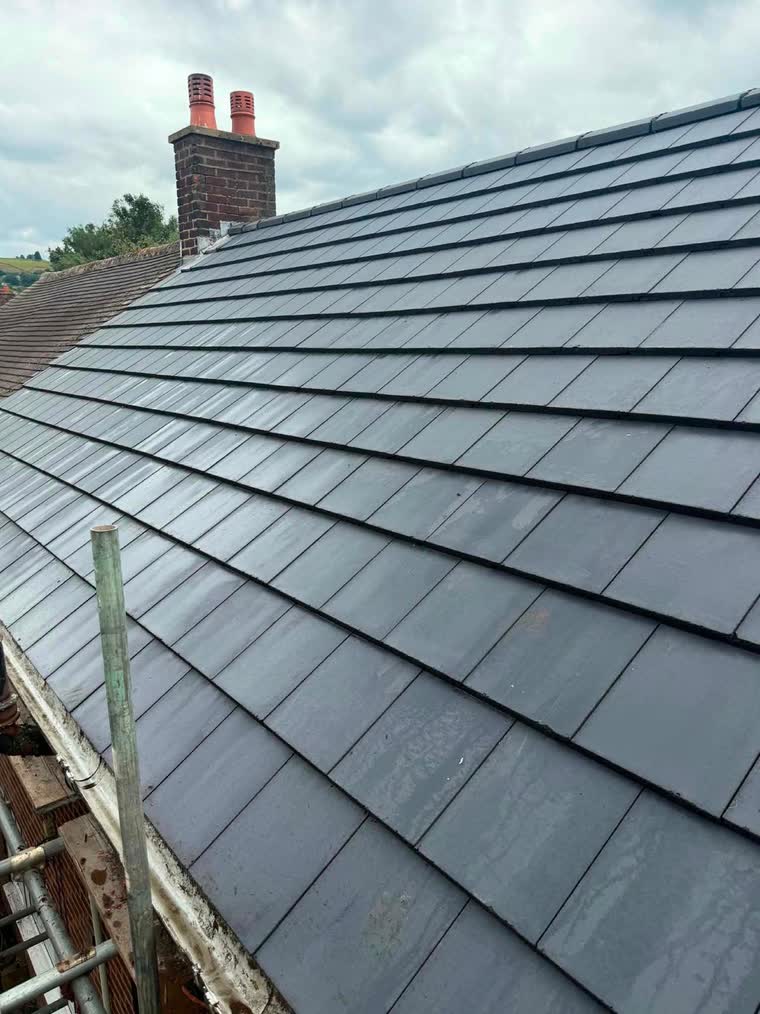
A re-roof means stripping the old covering back to the rafters and rebuilding the roof from the timbers up: new breathable membrane, new treated battens, new or reclaimed slates and tiles, and fresh lead work to the valleys and abutments. It is the right call once a roof is failing in several places at once rather than in one spot, and on a typical semi-detached house the work usually runs to a few days on site once the scaffold is up.
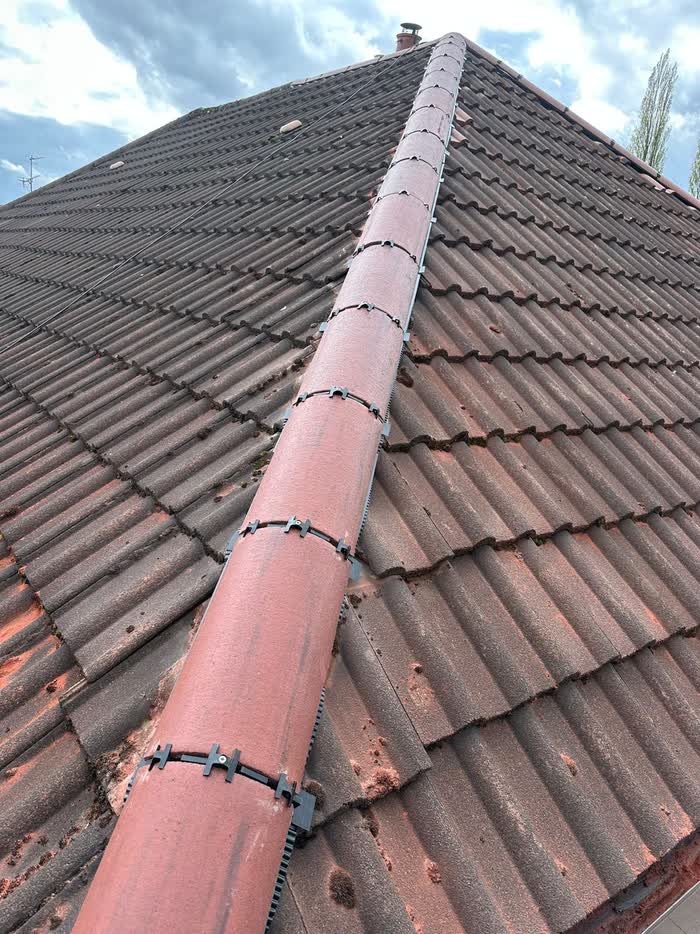
Most roofs give plenty of warning before they need replacing. Slipped slates start appearing after every gale, the felt underneath breaks down and drops grit into the loft, and patch repairs stop holding for as long as they used to. At that point another repair is money spent twice.
Signs your roof needs replacing rather than repairing
- Slates or tiles slipping repeatedly, in a different place each time
- Daylight visible through the roof boards when you are up in the loft
- Torn or crumbling felt, and grit collecting on the loft floor
- Sagging along the ridge line or between the rafters
- Damp patches on upstairs ceilings that come back after each repair
- Widespread cracked, flaking or delaminating tiles
What the job involves
Every roof is different, but the shape of the work is usually the same. Here is how a typical new roofs and re-roofing job runs.
Roof inspection and quote
We look at the roof properly, inside the loft as well as outside, and tell you whether it genuinely needs replacing or whether a repair will see you right for a few more years.
Scaffold and protection
Scaffolding goes up so the work can be done safely, and the ground and garden are protected before anything comes off the roof.
Strip and inspect the timbers
The old covering comes off and the rafters and wall plates get checked. Any rotten timber is replaced before the new roof goes on, not covered over.
Membrane and battens
New breathable membrane and treated battens go on, gauged to the slate or tile so the courses sit right.
Covering, leadwork and ridge
Slates or tiles are laid with the correct fixings, lead is dressed into the valleys and abutments, and the ridge and hips are bedded or dry fixed.
Clear up and hand over
Everything is cleared off site and the roof is walked over and checked before the scaffold comes down.
Want someone to take a look?
Call 07939 013870 or send a photo on WhatsApp and you will get a straight answer on what it needs.
New roofs and re-roofing near you
Weather Proof Roofing and Building Services covers Cheshire, North Wales, Merseyside and Greater Manchester. Pick your area for local detail, or call 07939 013870 if you are not sure whether you are in range.
Frequently asked questions
How long does a new roof take?
On a standard semi-detached house a full re-roof is usually a few days on site once scaffolding is up, and longer on larger or more complicated roofs. Weather is the main thing that moves the date, because a stripped roof cannot be left open in heavy rain.
Do I need scaffolding for a re-roof?
Yes. A full strip and re-cover cannot be done safely off ladders, and scaffolding is needed both for the people working and to stop material falling. The cost of it should be in your quote rather than added on later.
Slate or tile, which should I choose?
It usually comes down to what is already on the house and what the rest of the street has, because a roof that matches looks right and keeps the property saleable. Natural slate lasts longest and suits period property; concrete and clay tiles cost less and suit most modern housing.
Can you re-roof in winter?
Yes, roofs are replaced all year round. Work is planned around the forecast and the roof is never left open overnight, so a wet spell can push the finish date back a little.
Do I need planning permission to replace a roof?
Replacing a roof with a similar covering is normally treated as maintenance and does not need planning permission. It is different if the property is listed or in a conservation area, or if you are changing the roof shape or the material significantly, so check with the council first.